One of the most common questions clients ask at the start of a project is simple: Why does interior design cost what it does? It is a fair question—and one worth answering clearly. For many homeowners and property owners, interior design is often misunderstood as a service centered only on aesthetics: selecting finishes, arranging furniture, or making a space look polished. In reality, the cost of interior design reflects far more than what is seen at the end.
A well-designed space is not the result of styling alone. It is the outcome of planning, coordination, technical problem-solving, and hundreds of decisions resolved before construction begins. What clients are paying for is not just visual direction, but the structure behind it—the process that keeps a project clear, efficient, and aligned from concept to execution.
Understanding the cost of interior design begins with understanding what the work actually covers. When viewed only as a design fee, it can seem abstract. When understood as the framework that protects the project from costly mistakes, delays, and rework, its value becomes much clearer.
Interior Design Is More Than Aesthetic Direction
One of the biggest misconceptions about interior design is that it begins and ends with appearance.
While visual quality is part of the outcome, it is not the full scope of the work. Interior design is not simply about making a space look cohesive. It is about making sure the space functions properly, performs efficiently, and is resolved before construction begins.
Clients are not paying only for:
- color palettes
- furniture layouts
- mood boards
- finish selections
They are also paying for:
- space planning
- circulation strategy
- technical coordination
- construction detailing
- problem prevention
The visual result is only one part of the service. The real value is in the decisions behind it.
What the Cost of Interior Design Actually Covers
Interior design fees cover far more than design presentation. They support the full process of shaping and resolving a space properly.
A typical interior design scope often includes:
Discovery and Consultation
This is where the project begins. It involves understanding the client’s needs, how the space will be used, and what problems need to be solved.
Space Planning
This defines how the layout functions. It considers circulation, furniture placement, zoning, and how each area supports daily use.
Concept and Design Direction
This establishes the design language, material direction, and overall intent of the space.
Design Development
This is where the project is refined. Materials, finishes, details, and technical decisions are further resolved and coordinated.
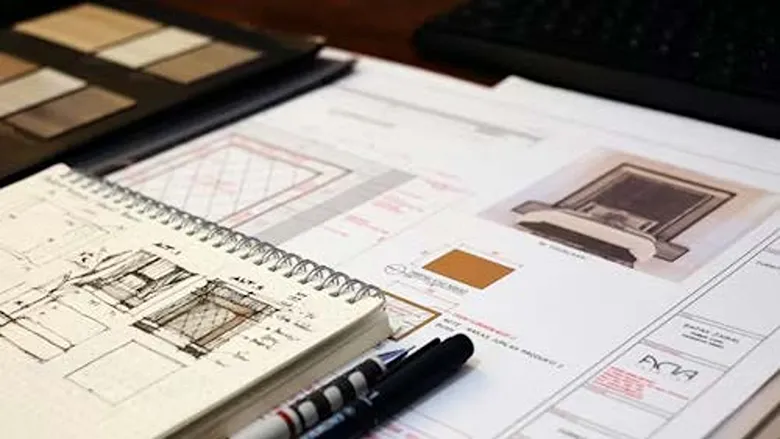
Technical Drawings
These are among the most important deliverables. They communicate dimensions, layouts, joinery, electrical intent, and construction details clearly for execution.
Coordination and Revisions
Interior design requires alignment between consultants, suppliers, contractors, and technical constraints. Revisions are part of resolving the project properly.
Site Review and Design Oversight
Even with complete drawings, design continuity during execution remains essential to ensure the built work reflects the intended outcome. The fee covers not just what is presented, but what is resolved.
Why Interior Design Fees Vary
There is no single standard fee because no two projects carry the same level of complexity.
The cost of interior design is shaped by several factors:
- Project size
- Scope of work
- Level of customization
- Technical complexity
- Number of spaces involved
- Coordination requirements
- Detail and documentation depth
A simple styling refresh will naturally require less than a full interior reconfiguration. A compact residence with extensive custom joinery may require more coordination than a larger but simpler space.
Design fees are not only based on size. They are based on what the project demands.
Understanding Project Cost Beyond Design Fees
One of the most common misconceptions is assuming that the design fee represents the full project cost. It does not.
Interior design fees are separate from the broader project budget, which typically includes:
- Civil and structural works
- Mechanical, electrical, and plumbing (MEP) upgrades
- Millwork and custom joinery
- Loose furniture and furnishings
- Decorative lighting
- Appliances and equipment
- Contractor overhead and profit
- Permits and building administration fees
This is where clients often underestimate project cost—not in the design itself, but in the layers required to execute it properly.
A well-prepared budget should separate:
- Design Fee – professional planning and documentation
- Construction Cost – labor, materials, execution
- Procurement Cost – furniture, fixtures, equipment
- Contingency Allowance – buffer for unforeseen conditions
This distinction is critical to accurate cost planning.
Why a 10–20% Contingency Buffer Matters
One of the most overlooked cost planning tools in any project is the contingency buffer.
A contingency allowance is a reserved percentage added to the project budget to absorb unforeseen conditions, price fluctuations, and scope adjustments during construction.
In most residential interior projects, a contingency buffer of 10% to 20% is standard.
This covers issues such as:
- concealed plumbing or electrical conflicts
- substrate irregularities discovered during demolition
- material price escalation
- supplier lead time substitutions
- minor scope adjustments during execution
Without a contingency buffer, even small changes can immediately disrupt budget control. A realistic project budget is not only defined by base cost—it is defined by how well it absorbs uncertainty.

What Clients Are Really Paying For
Clients are not simply paying for drawings or presentations. They are paying for the thinking that keeps the project clear and controlled.
This includes:
- Decisions made early
- Problems solved before construction
- Conflicts avoided between systems
- Clearer procurement
- Better coordination on site
- Fewer costly revisions later
In practice, this means fewer delays, fewer change orders, and fewer expensive corrections once work begins.
This is often the least visible part of interior design—and the most valuable.
The Hidden Cost of Change Orders
One of the biggest cost drivers in any project is the change order.
A change order is any revision made after construction has already begun that affects scope, materials, dimensions, labor, or sequencing.
These changes often lead to:
- additional labor charges
- demolition and rework
- fabrication revisions
- material wastage
- schedule delays
This is why late decisions are expensive. They do not simply add cost—they multiply it.
A design decision made on paper is inexpensive. The same decision made on site is significantly more costly.

Why Good Design Often Costs Less Over Time
Interior design may appear as an upfront cost, but its value is often measured in what it prevents later.
A well-resolved design can reduce:
- rework during construction
- unnecessary material waste
- procurement errors
- maintenance issues
- future renovation needs
It also improves:
- space efficiency
- usability
- durability
- construction clarity
- long-term performance
The real cost of a project is not only what is spent to build it. It is also what is spent correcting what was not resolved properly the first time.
Cost vs. Value: The Better Question to Ask
A better question than How much does interior design cost? is What does it protect the project from?
When framed this way, the value becomes easier to measure.
Interior design protects the project from:
- unclear planning
- inefficient layouts
- avoidable revisions
- material mismatches
- construction delays
- long-term underperformance
This does not mean every project needs the most extensive design scope. It means every project benefits from clarity.
The cost is not simply in what the service adds. It is in what it prevents.

The cost of interior design is often misunderstood because much of its value is built into what clients do not see. It is not only the visual direction of a space, but the planning, coordination, technical clarity, and budget control that shape how the project is executed and how well it performs over time.
Clients are not simply paying for drawings, finishes, or styling. They are paying for the decisions that reduce change orders, protect construction flow, and preserve cost control across the life of the project.
When understood properly, interior design is not just a design expense. It is a structured process that protects time, cost, and long-term value. Before asking what the fee costs, it is worth asking what it helps prevent—and what that clarity is worth over the life of the project.